Notes from a dragon mom
Este es un articulo para la posteridad y el beneficio de todo padre. Incisivo y brutalmente honesto acerca del verdadero objetivo de ser padres. Ojalá que Dios te conceda un milagro, Emily Rapp. Gracias por escribir semejante reflexión. No me cabe la menor duda de que debió ser sumamente doloroso escribirla.


12.10.11
Operación Niño de la Navidad / Operation Christmas Child
Aquí hay algo que puedes hacer justo antes de la Navidad.
Here's something you can do right before Christmas.
Here's something you can do right before Christmas.
7.10.11
José y Cristo
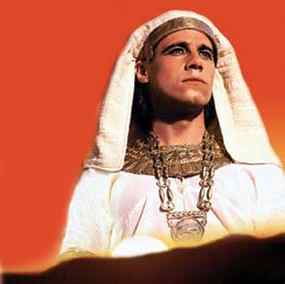 Pocos relatos en el Antiguo Testamento reflejan tan bien la redención como lo es el relato de José en los últimos 10 capítulos de Génesis. Una quinta parte de Génesis tiene que ver con Abraham, su llamado y los pactos que Dios hizo con él. Otra quinta parte tiene que ver con Jacob y su transformación en Israel. Casi dos quintas partes de Génesis tienen que ver con los relatos de la Creación, la Caída, Noé y el arca, el crecimiento y desarrollo de la humanidad en la tierra, e Isaac. Poco más de una quinta parte de Génesis cubre la vida de José.
José no pudo haber caído más bajo y haber sufrido más. Sus sueños premonitores cuando era joven no sentaron bien con sus hermanos mayores. Esos dos sueños en donde sus hermanos representados como manojos de trigo que se inclinaban ante él, el único manojo de trigo que permanecía derecho, y otro sueño en donde el sol, la luna y 11 estrellas le rendían reverencias encendieron la envidia e ira de sus hermanos.
Vendido como esclavo por 20 monedas de plata a una caravana de mercaderes árabes en dirección a Egipto, allí fue nuevamente vendido como esclavo al jefe de la guardia del faraón. José nos introduce realmente a lo que es el bajo estado de la esclavitud y cómo ésta se convierte en parte del plan de Dios para cumplir su promesa a Abraham de que “en ti serán bendecidas todas las naciones de la tierra.”
Irónicamente, Dios, cuyo control de la historia humana es absoluto y protagónico, maneja los eventos en la vida de un joven hebreo convertido en esclavo de tal manera que su vida es redimida de una manera que sólo podríamos describir como sobrenatural para traer la redención de un pueblo insignificante. Fuimos creados libres y para la libertad, pero es a partir del estado más opresor de la humanidad, el de la esclavitud, que comenzamos a ver el largo camino hacia la libertad, una libertad perdida y que no podemos lograr por nosotros mismos, y también a experimentar el largo proceso de la redención humana al final del libro de Génesis en la figura de José.
José es un esclavo que ahí cuando pensamos que no puede caer más bajo, en efecto, es arrojado al calabozo por causa de una acusación falsa. Una cárcel de Egipto en tiempos faraónicos sería sin pensarlo mucho uno de los lugares más solitarios, inhóspitos y crueles. En José tenemos un símbolo de la bajeza del pecado de la humanidad no porque José haya pecado abiertamente sino porque su experiencia refleja que el hombre como pecador se encuentra en un calabozo de donde no hay salida sin intervención divina.
Por otro lado, José también simboliza que no hay circunstancia alguna por muy oscura y desesperanzadora que sea que no pueda ser redimida por Dios. Fue del lugar más lejano, profundo y oscuro del cual Dios saco a José para ponerlo en lugares altísimos. Esto sucedió no para la gloria de José sino para la de Dios. Esto sucedió no para la salvación propia de José sino para la de su familia. Sucedió para que toda una nación, Egipto, fuese salvada. La aparentemente miserable vida de un hombre y sus igualmente miserables circunstancias fueron el medio que Dios usó para revelar que no hay dios que pueda redimir como el Dios de José, el Dios de Abraham, Isaac y Jacob. Así que José también representa la gracia y bondad de Dios.
Pero hay algo más que José también representa. José fue rechazado y abusado por sus propios hermanos. Fue vendido como esclavo por 20 monedas de plata. Ese rechazo y traición pudieron dar paso a una venganza sin reservas por parte de un José exaltado prácticamente a la cúspide del poder humano tan pronto se le presentó la oportunidad de ajustar cuentas con sus hermanos. Pero, ¿qué vemos a José hacer?
Sí, él pone a prueba a sus hermanos. Sí, desea saber si en el corazón de ellos hay remordimiento por la desgracia que le ocasionaron al venderlo como esclavo y alejarlo de su familia. Y sí, es en esa prueba que Dios ajusta cuentas con esos hermanos y el pasado que ellos habían ocultado de su padre por tantos años. En la prueba que José les hace a sus hermanos Dios los libera del peso del remordimiento y la recriminación. Dios los libera de la gran culpa que llevan a cuestas ya que reflejan que realmente cometieron un gran pecado contra José, contra su padre Jacob y sobre todo contra Dios mismo.
Ahora que Dios lo ha puesto en alto, José tiene la oportunidad para juzgar y condenar. El tiene el poder. Sin embargo, no lo hace. Tenemos que preguntarnos cómo puede resistir la tentación después que le provocaron tanto dolor y sufrimiento. José supo de su propósito tan pronto sus hermanos se presentaron ante él en Egipto. Eran los años de las vacas flacas y a todos nos llega un tiempo así tarde o temprano.
Sus hermanos pensaron y planificaron mal contra él, pero Dios lo cambió para bien. Ellos habían provocado su descenso a la esclavitud pero Dios rompió sus cadenas y lo puso en libertad. Por esa gracia que sólo Dios comunica a nuestro ser, José había podido entender que su noche oscura había dado lugar a un nuevo día radiante y que el ser recipiente de dicha gracia tiene que convertirnos invariablemente en comunicadores de esa misma gracia inmerecida. “De gracia recibiste, da de gracia.” Por lo tanto, José no les paga a sus hermanos con la misma moneda. ¿A quién se nos parece José?
José representa a Cristo tal vez como pocos otros personajes en la Biblia. En determinados instantes de la pasión de José podemos ver también la pasión de Cristo. José fue traicionado. También Cristo. José fue vendido por 20 monedas de plata. Cristo por 30. José fue juzgado injustamente y puesto en cadenas. También Cristo. Por medio de él se logró la preservación de una pequeña familia. Por medio de Cristo se logró la redención de la familia de la humanidad. José es símbolo de Jesús. Todo lo que ocurre en su vida apunta a Cristo. En José vemos como en medio de tanta escasez y hambre puede haber una salvación tan abundante. En Cristo vemos como el desierto del pecado y la escasez de la muerte son destruidos para dar lugar a la tierra fértil de la redención divina. Si José no hubiese sido esclavo no hubiese conocido el verdadero significado de la redención. Si Cristo no hubiese sido hombre no hubiese podido llevar nuestras culpas sobre sí en la cruz. De en medio de circunstancias en las que se nos hace prácticamente imposible pensar que pueden salir la redención, la libertad y la salvación, Dios hace precisamente esas cosas. Dios hace manantiales en el desierto.
De todos los personajes fascinantes que hay en el primer libro de la Biblia, José sobresale porque es a viva voz una imagen de Cristo y el poder de su redención en favor de la humanidad.
15.9.11
El Principio de la Pureza por Randy Alcorn
 The Purity Principle: God's Safeguards for Life's Dangerous Trails by Randy Alcorn
My rating: 5 of 5 stars
A little book with enormous content on sexual purity and integrity. Impressively quick read with a wealth of insight, stories, wisdom and practical advise to help us prevent and fight sexual immorality. This short book will do a lot of good to everyone who reads it.
Un pequeño libro con enorme contenido sobre la pureza e integridad sexual. De lectura rápida, sumamente incisivo, lleno de historias y consejos prácticos que nos ayudan a prevenir y luchar contra la immoralidad sexual . Este corto libro hará muchísimo bien a todos lo que lo lean.
View all my reviews
10.8.11
"You ain't walking on no water"
I just came from spending a week away at a lake house in Maryland with my family. It’s been one of our best vacations ever because we did a lot of different things including spending a day at the lake. We rented a boat, got our life vests, fishing rods, float thingy, snacks, sunscreen and off we went. We went all over that lake, every single corner of it. I had never experienced something like it - spending most of the day on the water just having fun with my family. Maybe all Genesis 1:2b should really say is “...and the Spirit of God was having fun over the waters” instead of “...and the Spirit of God was hovering over the waters.”
My kids had a blast, my wife had a blast and I had a blast too. You may think this is dumb (and I won’t disagree with you), but one of the things I tried to do while at the lake was to walk on the water. To make a long story short I just couldn’t so I gave up pretty quick. I reached a pretty easy conclusion -Sorry Carlitos! You ain’t walking on no water! At least, I gave it a good shot.
I just preached on Matthew 14:22-33 this past Sunday. It’s the gospel passage where Jesus walks on water. For me, it simply is one of those puzzling passages in the Bible. I even find it frustrating. Can you imagine how cool it would be to walk on water? No, seriously. I know it’s the stuff of movies and fantasy, but along with flying it’d still be one of coolest things ever if we actually could pull it off. Maybe you’ve dreamt about it. I never have, but a few have told me they dream they can fly free as a bird. My cousin Abby has told me that she stops on the clouds on a whim to take a rest from her long flights.
I’ve never heard however of anyone saying they dreamt they were walking on water although I wouldn’t be surprised if there are a ton of people who do. Yet, about the best we can do is daydream about it because after all is dreamt and done you ain’t walking on no water. That’s precisely what makes this passage maddening for me. Jesus said we’d do "even greater things than these, because I am going to the Father". Yes, I’m incurring in some hermeneutical gymnastics here, but Jesus actually said it and if you think about it he said it about things that are actually more mind-boggling than walking on water. Raising the dead anyone?
In Matthew 14, before our gravity defying Christ cruises over the waters, he heals not just one or two people. There were probably hundreds of people that passed through his healing hands among the thousands that followed him on that particular occasion. Then he decides not to send people to McDonald’s, but feeds them himself, all 5,000+ of them. I dig that. You hear me! I. Dig. That. I believe with every single fiber of my being in the all-powerfulness and the all resourcefulness of my God. Yes, I believe he can heal the sick. Yes, I believe he can raise the dead. Yes, I believe he can feed the hungry. I even believe he has given that same power to his followers. Yes, that very same power.
So why does the Bible have to tell me about Christ surfing without a surfboard on the Sea of Galilee? What’s in that one for me? It totally doesn’t rock my boat. Let me reassure you that I do not doubt about Christ walking on water here. On the contrary, I believe the veracity of the account. I just wish it wasn’t there. Yes, in the Bible. Of all the things Christ did I truly wish he would have spared us knowledge of this event. At least the walking on the water part of it. John said toward the end of his gospel that Christ did far more things than the ones written in his book. This passage of Matthew 14:22ff is also in John 6. I wonder why he didn’t use one of those other few thousands of physics-breaking miracles he never got to write about instead of this one. Ok, ok. It’s not about me so let me remind myself to take a bit of my own medicine. Sorry Carlitos. You ain’t walking on no water.
But let me break it to you too, my friend. This passage isn’t about Jesus walking on water either. It’s not like he’s playing us and saying “Oops! My bad, amigos. Sorry I didn’t tell you I could walk on water.” No, no. Jesus walking on water is equal to Jesus drinking water. He just does that kind of thing. He’s God. Period. And that’s the real point of the story. He’s God. He heals the sick. He’s God. He doesn’t send people to McDonald’s to go get some crappy happy meal either. Who’d want to go to McD’s when Jesus is serving dinner anyway? He shows himself in the middle of the storm and lets it rage. He’s God. So it doesn’t matter if the storm is raging. He shows himself in the middle of the storm to dispel it. He’s the Prince of Peace. He’s God.
You and I ain’t walking on no water. I just want you not to forget that. You may tell me, “What about Peter then? He did walk on water!” Why, yes he did! I’ll tell you. He took a half-hearted step out of the boat and sank like the rock he was. And that’s about what you and I can do whenever we venture out on a life storm without Christ. We ain’t walking on no water. So much so that when his friends in the boat with him had a chance to ask him about what it had felt like to walk on water I bet you his reply was either “I don’t want to talk about it” or “It doesn’t matter. I sank like a rock. I don’t know what I would’ve done if Christ hadn’t been there for me.”
When it comes to us what matters is our hearing the voice of Christ saying “Come” regardless of the raging storm outside our boat. Regardless of the water seeping through the cracks of our life boat threatening to sink it, what matters is to let Christ in to save us from our life storm. To save us even from ourselves.
I know I ain’t walking on no water. But if it’s Christ telling me to come outside the boat, I can assure you I’m gonna give it my best shot. He’s gonna be there and that’s all that matters. That IS all that matters. So if you go out to the lake or the beach at some point don’t forget to try to walk on water. You’ll laugh at yourself trying or, like me, just get frustrated because I’m not that powerful. Sorry Carlitos. You ain’t walking on no water. Jesus will have to do.
 |
| "¡Señor, sálvame!" Mateo 14:30 |
Suscribirse a:
Entradas (Atom)