20.3.15

El héroe silencioso

Tal vez no resulte tan obvio para mis hermanos y hermanas que asisten a la Comunidad Hispana en Truro, pero como el pastor de una iglesia pequeña siempre estoy pendiente de quién llega y quién no cada domingo a la iglesia. Es siempre más fácil enfocarse en los que no llegan por la sencilla razón de que uno piensa más en la diferencia que habrían hecho en la asistencia dominical si hubiesen llegado. “¿Dónde están mis hermanos? ¿Por qué no están aquí?” me pregunto cuando ha comenzado el servicio y tengo más bancos vacíos en la iglesia que personas presentes.

Esta Cuaresma comencé a fijarme más en los que llegan que en los que no. No puedes controlar las ausencias así como tampoco puedes controlar quien llega, pero la presencia de mis hermanos es un fuerte testimonio de la gracia de Dios en medio nuestro. “Donde hay dos o tres reunidos en mi nombre…” No siempre llegan los mismos, pero lo importante es que llegan. Como pastor, me bendice enormemente tener a mis hermanos y hermanas conmigo adorando a nuestro Señor como el cuerpo que somos, la Iglesia de Cristo.

Dentro de este pequeño grupo de personas que ha llegado a la iglesia cada domingo de Cuaresma, he notado a un hermano en particular. Su nombre es Juan. Hace años que Juan viene a la Comunidad Hispana con su familia. He tenido la bendición de bautizar a dos de sus tres hijos. Su hija menor, Galicia, apenas ha cumplido un año de edad. Galicia aún no camina así que Juan viene a la iglesia trayéndola en su cómodo asiento para bebés. Durante la Santa Comunión, Juan se acerca al altar con Galicia en sus brazos para recibir el Sacramento y procurar la bendición de su hijita de manos del pastor.

Esta es la rara escena que me ha bendecido capturando mi atención varios domingos de esta Cuaresma - un padre que mientras el resto de su familia está ocupado en otros menesteres, viene a la iglesia acompañado de su pequeña Galicia. Pareciera ser insignificante lo que hace Juan, pero no lo es de ningún modo. Las iglesias hoy día, de cualquier tradición que sean, tienen como promedio a más mujeres que hombres. Si hay niños en la iglesia que no vienen con papá y mamá juntos, vienen en su mayoría con mamá. Así que el simple hecho de que Juan venga a la iglesia con su hijita es muy notable porque por lo general el padre de una bebé de apenas un año de nacida no se aventuraría a salir solo con ella y mucho menos a una iglesia en donde la niña puede de repente, sin aviso alguno, irrumpir en canto, quiero decir, llanto. Y no hablemos de tener que bañarla, vestirla y darle de comer antes de colocarla en su asiento para bebés y asegurarla en el carro para salir a la iglesia el domingo en la mañana para poder llegar lo más temprano posible a adorar al Señor.

Las madres tienden a afrontar estas situaciones embarazosas con el asombroso aplomo maternal que las caracteriza, pero un padre no tiene los instintos (muy bien podría usarse otra palabra aquí) necesarios para encarar semejante mortificación. Si se encuentran los dos padres juntos y la bebé comienza a llorar sin consuelo en los brazos de su padre, ¿cuál creen ustedes que es la reacción casi automática del padre? No hay que pensarlo mucho; en fracción de segundos y de manera olímpica mamá recibirá el alborotoso batón de parte de papá.

Sin embargo, en los domingos de Cuaresma que Juan y Galicia, padre e hija, han venido a la iglesia juntos no recuerdo haber escuchado a Galicia llorar ni una sola vez. Siempre que la veo está despierta, observándolo todo y muy tranquila. De seguro que a pesar de que Galicia no logre tener a estas alturas de su vida un recuerdo a largo plazo de las salidas a la iglesia con papá, Dios les está regalando a ambos, especialmente a papá, un recuerdo sin precio. ¿Cuántos niños pueden decir con frecuencia que fueron a la iglesia porque los llevó papá? ¿Cuántos padres pueden decir que sus hijos vienen a la iglesia porque los llevó él? Lamentablemente, esa es más la excepción que la norma.

Por eso, si me propusiera buscar un héroe para la Cuaresma, alguien a quien emular, tendría que admitir que ya lo he encontrado. Su nombre es Juan. Tengo que preguntarme ¿qué lo motiva a venir a la iglesia un domingo temprano en la mañana cuando tantos otros padres se preparan no para ir a la iglesia sino al parque, la playa o simplemente prefieren quedarse durmiendo, en algunos casos a pesar del pedido de sus hijos de traerlos a la iglesia? Si no fuera su amor a Dios sería difícil dar una razón que tenga sentido.

¿Quién diría que este tipo de héroes existe?

Así que un padre y su hijita que ni siquiera sabe que estamos en Cuaresma han sido mi bendición en esta época de introspección y examinación. Se requiere autonegación para decirle sí a Cristo y no a nuestros deseos - ese es el mensaje de la Cuaresma. Se requiere disposición para cargar nuestra cruz y seguirlo día a día - ese es el mensaje de la Cuaresma. Se requiere prestar mucha atención y guardar silencio más allá de lo acostumbrado para darnos cuenta de que Dios nos habla de maneras sutiles y nos muestra su bondad en momentos aparentemente ordinarios, pero nada es ordinario acerca de su bondad.

Un héroe silencioso me ha llevado a esta meditación cuaresmal y doy gracias a Dios tanto por él como por los que son como él. Hoy más que nunca es este el tipo de héroes que necesitamos. Son héroes con una visión del reino de los cielos. De seguro que si estuviéramos en tiempos de Jesús, entre los padres que trajeron a sus niños para ser bendecidos por él encontraríamos a Juan.

4.3.15

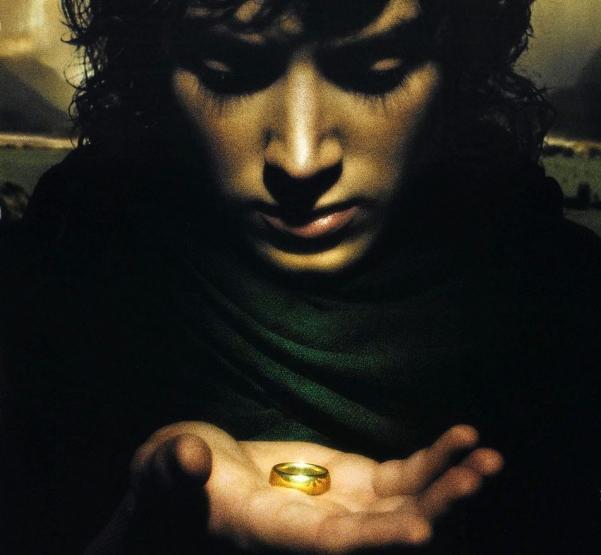
What's your ring?

frodo(1).jpeg
Frodo and the One Ring
Recently (Lent had already begun), my youngest son spent some time with me in my office at church. Fortunately, I have so much stuff in my office to entertain him that i didn't have to pay much attention to him. Whenever he needed help solving one of the many mysteries he was uncovering I'd help him. Like when he discovered my former "office chair" - a gigantic bouncy ball I had deflated and put back in its box because I had reached my bouncing quotas for a non-traditional office chair. Of course, he took it out and spent all that ever-flowing energy inflating it again.

Once that mission had been accomplished and still armed with time on his hands to look at everything he could, there came a point when he called my attention to my old copy of The Lord of the Rings sitting on one of my shelves. I must confess I had forgotten about it. He asked me why I had bought one of his brothers the book just a few weeks back when I already had a copy. All I could answer was, "Son, I forgot it was here."

That copy of LOTR is of sentimental value to me. It had been lying around the house for the longest time until I realized I had to actually remove it from utter destruction. My boys would have made sure of that. I took the different separate parts (it had come to that) and put them back into a coherent whole and brought it to my office. The book had been thoroughly read and used. Its spine had been cracked in more than a few spots. This paperback copy lived in that hallowed level of existence that describes a once been brand new book turned into the envy of books never cracked open.

I bought my copy of LOTR at Barnes and Noble in Valencia, California, a few months before the first installment of the Peter Jackson movies came out in 2001. I read the book throughout the course of the three years that it took for all movies to come out finishing shortly after The Return of the King in 2003.

For some reason the book caught my attention once my office invading son made me lay eyes on it. I asked him to take it off the shelf and give it to me. Embracing my inability to stay focus on the task at hand, I started scanning the book and came across many sections I had highlighted early on in my reading many years ago. When I got to chapter two, Book 1 of The Fellowship of the Ring, my eyes stopped scanning and started reading again. Chapter 2 is titled The Shadow of the Past. It contains a striking dialogue between Gandalf, who had just come back to the Shire for a visit, and Frodo concerning the ring. I'll quote that part of the dialogue here,
'How long have you known this?' asked Frodo at length. 'And how much did Bilbo know?'

'Bilbo knew no more that he told you, I am sure,´ said Gandalf. ´He would certainly never have passed on to you anything that he thought would be a danger, even though I promised to look after you. He thought the ring was very beautiful, and very useful at need; and if anything was wrong or queer, it was himself. He said it was "growing on his mind", and he was always worrying about it; but he did not suspect that the ring itself was to blame. Though he had found out that the thing needed looking after it did not seem always of the same size or weight; it shrank or expanded in an odd way and might suddenly slip off a finger where it had been tight.´
'Yes, he warned me of that in his last letter,' said Frodo, 'so I have always kept it on its chain.'

'Very wise,' said Gandalf. 'But as for his long life, Bilbo never connected it with the ring at all. He took all the credit for that to himself, and he was very proud of it. Though he was getting restless and uneasy. Thin and stretched he said. A sign that the ring was getting control.' P. 46, 1994.
Ah, control. What a lovely word. Especially now during Lent when we do our best to let go of things we consider having too much control over us. I think it was God´s grace in the form of a nine year old that drove me to the text from the LOTR quoted above. Precisely because we all struggle, like Bilbo and eventually Frodo, with letting go, relinquishing control is an excruciating endeavor for most of us. And then comes Lent to remind us precisely that we need to let go even more. Don't get me wrong. I thank God for Lent. It is one of my favorite seasons in the church year, but not for the reasons one might think. I relish the opportunity and welcome the call to self-examination and repentance that Lent invites me into. I thank God for his free gift of the Holy Spirit to work continually in me to make me into the image of his Son Jesus Christ. I am humbled by his superabundant grace when I know I come up short, particularly since I'm not good at keeping the disciplines I eagerly set out to keep during the season.

It´s not the drastic, cataclysmic things in our lives that usually gain control over us, although they may. It´s the small continual things that seep through the tiny cracks in our souls without us noticing them over time. As Gandalf noted to Frodo regarding Bilbo and his beautiful ring, 'A sign that the ring was getting control.' This "getting control" happened over a lifetime. Think about it. Bilbo credited his longer than usual lifespan to anything and everything save the ring. The paradox is that the real cause for the length of his life was actually the thing that was ultimately destroying it. The only thing that saved Bilbo's life was relinquishing the ring, the thing he loved the most. The only way he did it was by actually going as far away from it as he could. He left for a safe place, his refuge became the House of Elrond in elven country.

It is always a struggle to challenge those things deeply rooted in our souls which we know we have to uproot. Sometimes it's way easier to let them alone, undisturbed. But the question is "Can we afford not to disturb them?" Lent is a continual calling not just for a season but for a lifetime to disturb those things in us that have become cozily settled gaining control over us without paying attention to what's happening to us in the process. We need to be unsettled this Lent and always because we are on a collision course with the most unsettling event in the history of humanity, the Crucifixion - the war to end all wars, the death to end all deaths. Will we be ready when we get there?

May God grant us grace to allow ourselves to be unsettled, shaken from the bounds of fictional control unto the spiritual and physical reality where it is the Holy Spirit of God the one who actually holds the reigns of our lives and calls all the shots making us truly free. God who delights in being merciful may send some unsuspecting nine year old to help us in the process. So whatever they maybe, Lord grant us the strength to take our rings of power off.

19.12.14

My Thoughts on the Presidential Executive Order of 20 November 2014


President Obama's executive action on immigration just came out. With a bang! While it doesn’t solve the broader need for comprehensive immigration reform, his case and legal basis for his decision are indisputable. No one can argue that the political ping pong that has been comprehensive immigration reform in the  last decade has to be dealt with sooner rather than later. The president waited long enough for the proper congressional channels to do something about it. He even broke his promise to act on immigration through executive power before the midterm elections. A move that would gain him the fierce denunciation of so many who had trusted him to act. Once the dust of the midterms settled, the president did act doing the right thing.

He's been saying all along that he didn't have the power to act on immigration. That is true as far as legislative powers are concerned. Given the ineffective monstrosity that is our immigration system, the wallflowering of congress on the issue and in light of the millions of undocumented residents in this country whose only crime was to cross the border illegally or overstay their visas, it would have been a bigger crime to stonewall the problem into the new year.

The president's action falls well within the precedent of prior executive actions on immigration in the United States. It is neither illegal nor unconstitutional. Every president during the last 60 years has acted on immigration and among them Ronald Reagan shines the brightest having gone to the full extent of his powers granting amnesty to undocumented immigrants while he was president. Executive power doesn't get any more powerful than that and no one accused him of being an imperial president. Was it a political or a practical move on his part? It was both, but above all Reagan saw it as the right thing to do.

This makes the loud Republican acrimony all the more shallow. If there ever was a political issue that could have been easily decided through the legislative process and in a bipartisan fashion, it was immigration reform. At least the US Senate agrees having passed a compromising but effective bill, but the entrenched partisanship and ideological shortsightedness of the US House of Representatives proved too much to give comprehensive immigration reform its day in the sun. Not even the two biggest Republican forces in the first decade of our millenium - George W. Bush and John McCain - were able to bite into it despite their desire and efforts to bring about a reform and acknowledging the problems with our current immigration system.

The Obama presidency has made something starkly clear, our political establishment of the Right kind has an anti-immigration problem. That problem our friends on the Right would have us believe is a political problem at its core. No one will doubt the political or better yet the partisan nature of the issue. But the issue of immigration and immigration law is at its deepest root one of ethics. Is what the president has done by exerting his executive power on our broken immigration reality morally defensible? Beyond the law, is it morally right or wrong? No question that the whole issue is tainted by politics, but has the president been motivated by something more substantial than the law as it is currently written? Is there an appeal to a higher authority than legality itself regarding the destiny of individuals and families affected by the immigration status quo? I believe that in both of his executive actions the president has made that appeal clear.

Remember his executive action for Deferred Action for Childhood Arrivals (DACA) two years ago when he said "It's the right thing to do"? It is a moral appeal that has received little attention in the media perhaps due to the perceived "amoral" political nature of the conversation, but it has been there. And then in his most recent action on the issue, he quoted Holy Scriptures! Many may see this cynically as in "Oh, how convenient!" Granted, every politician worth his salt must be skilled in the art of political expediency, but is that what the president did here? I don't think so.

With this line of reasoning I'm not proposing that we hold the president as a true believer in a religious sense since religious practice tends to be highly moral. He may or may not be depending on whom you ask and quoting Scripture in a political speech does not one a believer make. So such judgements will have to be left in the hands of a better judge.

What indeed comes through in both his executive actions on immigration is that they more than appear to be based on higher moral grounds than other political actions our electoral politics afford. This particularly comes into play when one faces the prospect of any elected official acting unilaterally, on the sole basis of his authority. Here the best example is obvious, the Officer in Chief of the USA exerts his power as such. Our political system allows for such use of power, albeit delegated, and when power is exerted on the basis of one's sole authority the ethics of the action and its repercussions are heightened. Did the president do the right thing on purely moral grounds with his executive orders on immigration or not? One would be hard pressed to say that he didn't. He's on the way out so politically speaking he doesn't need to score any more points.

To this extent I contend that it is the opposition, the anti-immigration political establishment who has no moral grounds to stand on regarding their views. The more they fight this executive action the more hollow both they and their arguments appear. What is their cohesive anti-immigration moral argument? They don't have one. The more noise they make the more ridicule they'll receive. In fact, they still have a window to up the president and show the rest of us that politics still have a respectable future in our country. Pass a bill. Unlikely, because according to them the American people have been victimized by an imperial president.

Imperial histories show us that the seat of power and the source of authority lay with the emperor. "Hail, Ceasar! Son of the Gods!" But the truth is that no emperor nor his or her empire is eternal. In spite of appearances, even in empires all authority is delegated. When a theological eye is put upon such seats of power, it is undeniably clear that they respond to a higher seat of authority. No human is or has ever been the root of power. We are all opportunistic when it comes to it. We seize it by any means necessary. Even the vote is an expression of that seizure. No human being is the ultimate authority. The affairs of men and their politics are ultimately shaped by a higher arbiter in whom reside the true seat and absolute source of all authority and might.

If this is true, then I cannot escape the question of  Do President Obama's actions on immigration fall under the purview of a grander scheme of politics in which he is only a player, even an important player in comparison to the rest of us? In short, was he an instrument of God in "his" use of power and authority to benefit almost five million undocumented residents of this country?
The imperial histories portrayed in the Bible - Nebuchadnezzar, Cyrus, Caesar - will say that this is not a far cry in its application to what we have just witnessed in the president's' executive order. God avails himself of the most powerful precisely to show them and us all who is ultimately the most powerful. His purposes, while political insofar as they pertain to his kingdom, are far more reaching than comprehensive immigration reform. It so happens that the issue could not have been more appropriate, because as the president said in his speech, "We were all strangers once."

The longing of the human heart is to not be estranged from one another. It is to be "legit", validated and approved. The longing of the human heart is to be embraced not rejected. No one wants to be an outsider, an alien. We all want to belong.

We still need comprehensive immigration reform in our country, but the president has given us all a clear example of how power can be used swiftly and morally, in spite of smoke charges to the contrary, to change not only a derogatory description - illegal alien - but the livelihood of almost five million people in our country. No human being is illegal, and while many today assert that this president is the most ungodly president that has come around in a while, behind his executive action on immigration of November 2014 I hear a prayer answered and I see God's merciful hand at work.

15.10.14

Algunas notas sobre el matrimonio y la familia

Estas entradas pertenecen a una visita de Don Renzo Bonetti, sacerdote católico romano de Provolone, Italia, que nos visitó en Truro hace unos dos años atrás (2012). Las mismas se dieron en el contexto de la Conferencia sobre la Teología del Cuerpo en la cual también participó Christopher West.

  • Hay una cosa a la que Dios no ha renunciado: la familia.
  • Dentro del amor esta la experiencia de Dios.
  • No hay nada como un hombre y una mujer juntos.
  • Cuando el amor es real no se puede medir. ¿Por qué? Porque el amor es infinito. 
  • (Dios ha dado) la luz del matrimonio para enseñarnos lo que es el amor. 
  • CEF = Comunidad para la Evangelización de la Familia 
  • Dios vio que hizo/ha hecho una cosa muy bella - el matrimonio/la familia. 
  • El gran regalo es la redención. (The great gift is redemption.)

2.9.14

Llenemos nuestro tanque

marriage-2.1.pngHace unos días una compañera de trabajo comentó en su facebook que se había quedado sin gasolina en la carretera con su hijita de cuatro meses. En su mensaje pedía oraciones por su protección mientras llegaba su esposo a socorrerlas con gasolina para el auto.

Esta noticia no es nada inusual. A pesar de los avances tecnológicos en los autos de hoy día para evitarlo, la gente por distracción o descuido se queda sin gasolina continuamente. A mí me ha pasado más veces de las que quisiera admitir.

Gracias a Dios quedarse sin gasolina es un problema muy fácil de resolver, particularmente en estos días de comunicación instantánea. Todo lo que mi compañera de trabajo tuvo que hacer fue llamar a su esposo y problema resuelto. Si su esposo no hubiese estado a su alcance por alguna razón u otra, ella cuenta con bastantes personas entre sus contactos que la habrían ayudado. En una situación así hasta los desconocidos se hubiesen acercado para ayudarla.

Este simple suceso de un auto sin gasolina en la carretera se quedó grabado en mi mente y me hizo pensar en nuestras relaciones más importantes. Las cosas que más importan en nuestras vidas conciernen a nuestras relaciones interpersonales. Nuestros padres, nuestros hermanos, nuestros abuelos y tíos, nuestros amigos - todas estas son relaciones importantísimas para cada uno de nosotros. Se puede ser cada una de estas que he mencionado sin estar casado, pero ninguna de ellas es más importante que cuando se está casado porque es precisamente en el matrimonio donde todas las demás relaciones filiales e interpersonales hallan su origen. De ahí la desastrosa estadística que nos indica que de un 40 a 50 por ciento de los matrimonios en Estados Unidos termina en divorcio. La relación fundamental de nuestra sociedad está sufriendo una gran crisis hace años. ¿Qué sucede qué tantos matrimonios se están quedando sin gasolina?

Al aplicar la imagen al matrimonio no podemos escapar al hecho de que estamos tratando con un problema mucho más serio y grave del que cuando se nos queda el carro sin gasolina. Obviamente, no es lo mismo que se me quede el carro sin gasolina a que mi matrimonio se quede sin gasolina, pero la correlación es estrecha. ¿Descuido? ¿Distracción? Es muy posible. En el fondo, cuando tiramos la toalla con nuestros matrimonios - cuando se les acaba la gasolina - entran en juego cosas mucho más profundas que un simple descuido o distracción.

Así como sucede con nuestros carros, también sucede con nuestros matrimonios. La diferencia es que las implicaciones son más severas para nosotros y todos los que nos rodean cuando nuestros matrimonios se van a pique. Entonces cabe preguntarnos, ¿cómo evitamos que nuestros matrimonios se queden sin gasolina? La respuesta es sencilla: prestando atención a las señales de aviso así como solemos hacerlo con nuestros carros porque quedarse sin gasolina sea en nuestro carro o en nuestro matrimonio es un gran “mal rato” que no vale la pena pasar.

¿A qué viene todo esto? La razón es que mi esposa y yo queremos invertir una vez más en nuestro matrimonio y en el de todos los que deseen acompañarnos para una nueva jornada del Curso para Matrimonios en la Comunidad Hispana en Truro. ¡Queremos todos los tanques llenos!

Si el tanque de gasolina de tu matrimonio está lleno te invito a acompañarnos porque el Curso para Matrimonios te ayudará a continuar como vas junto a tu esposo/a. Si lo que tienes es medio tanque de gasolina en tu matrimonio, ven al Curso para Matrimonios porque te ayudará a llenarlo por completo. Si tu matrimonio está en “empty”, ven porque el Curso para Matrimonios te ayudará a llenarlo también. Si tu matrimonio se estancó porque se quedó sin gasolina, ven también y vuelve a descubrir la sensación, la seguridad y la felicidad que se siente cuando el tanque de tu matrimonio se vuelve a llenar. El Curso para Matrimonios es para ti.